

- by saeed
Why Is Your AC Leaking Water Inside Your Home in Abu Dhabi? Causes, Warning Signs and Solutions
Air conditioning is essential for maintaining indoor comfort in Abu Dhabi, where high outdoor temperatures often make cooling systems work for extended periods. However, discovering water dripping from an indoor AC unit, damp patches around the air conditioner or moisture on nearby walls can indicate a problem that requires attention.
An air conditioner naturally produces condensation during the cooling process. Under normal operating conditions, this moisture is collected in a drain tray and discharged safely through a condensate drainage pipe. When any part of this drainage system becomes blocked, damaged or incorrectly installed, water may start leaking inside your property.
If you are experiencing an AC leaking water problem in Abu Dhabi, understanding its possible causes can help you identify early warning signs and determine when professional assistance is necessary.
This guide explains why air conditioners leak water indoors, how drainage problems develop, what homeowners can safely check and how professional AC maintenance can help prevent recurring leakage.
Why Does an Air Conditioner Produce Water?
Before identifying the reason for a leak, it is useful to understand how moisture develops inside an air conditioning system.
When warm indoor air passes over the cold evaporator coil, moisture in the air condenses on the coil’s surface. This process produces water droplets, which collect in a condensate drain pan before flowing through a drainage pipe.
In a properly functioning air conditioning system, this water is discharged through the designated drainage outlet rather than entering the room.
However, if the drainage pathway is obstructed, the drain pan is damaged or the unit is not installed at the correct level, collected water may overflow or escape into the surrounding area.
Therefore, indoor water leakage is not necessarily a sign of a major refrigeration failure. It can also result from relatively simple drainage or maintenance problems.
- Blocked AC Condensate Drain Pipe
A blocked condensate drain pipe is one of the common reasons for indoor AC water leakage.
As the air conditioner operates, moisture collected from indoor air travels through the drainage system. Over time, dust, dirt, algae-like biological growth and other deposits can accumulate inside the drain line, restricting the flow of water.
When the pipe becomes partially or completely blocked, water may accumulate in the drain pan and eventually overflow.
Common warning signs include:
- Water dripping from the indoor AC unit.
- Moisture around the air conditioner’s front panel.
- Water stains on nearby walls or ceilings.
- Unusual dripping sounds during AC operation.
- Water collecting around a wall-mounted split AC.
What should be done?
A qualified AC technician can inspect the condensate drainage pathway, identify the obstruction and clean the drain line using appropriate equipment.
Regular inspection and cleaning of the drainage system can reduce the likelihood of recurring blockages.
- Dirty Air Filters and Frozen Evaporator Coils
Dirty air filters can restrict the airflow required for normal air conditioning operation.
When airflow across the evaporator coil becomes insufficient, the coil temperature may drop excessively, potentially causing moisture to freeze on its surface.
When the air conditioner stops or the operating conditions change, accumulated ice begins to melt. The resulting water may exceed the drainage system’s capacity or escape from the intended collection area.
This can cause an indoor air conditioner to leak water even when the drain pipe itself is not blocked.
Warning signs of frozen evaporator coils include:
- Reduced cooling performance.
- Weak airflow from AC vents.
- Ice formation on the indoor coil or refrigerant piping.
- Water dripping after the unit has been switched off.
- Longer cooling cycles or unusual operating behaviour.
How can this problem be addressed?
Homeowners should inspect accessible air filters and clean or replace them according to the manufacturer’s instructions.
If ice formation is visible, switch off the cooling function and arrange a professional inspection. Do not attempt to remove ice using sharp objects or dismantle the indoor unit.
A technician should examine airflow, filter condition, evaporator coil cleanliness and other possible causes, including refrigerant-related faults.
- Damaged or Overflowing AC Drain Pan
The condensate drain pan is designed to collect moisture produced during the cooling process and direct it towards the drainage pipe.
If the drain pan develops cracks, becomes corroded or is incorrectly positioned, collected water may escape before reaching the drainage outlet.
An overflowing drain pan may also indicate that the drainage pipe is blocked or that the condensate removal system is not functioning correctly.
Signs of a damaged or overflowing drain pan include:
- Water appearing directly beneath the indoor AC unit.
- Repeated moisture around the air conditioner.
- Leakage even after the drainage line has been cleaned.
- Water stains near the unit’s mounting position.
Recommended solution:
A professional inspection can determine whether the drain pan needs cleaning, repositioning, sealing or replacement.
Simply cleaning the drainage pipe may not resolve the issue if the collection tray itself is damaged.
- Incorrect AC Installation or Improper Drainage Slope
Correct installation plays an important role in preventing water leakage.
The indoor AC unit and its condensate drainage arrangement must be positioned according to the manufacturer’s installation requirements. The drain pipe also needs an appropriate slope to allow water to flow towards the designated outlet.
If the drainage pipe is installed with an unsuitable gradient, has unnecessary bends or is improperly connected, water may accumulate instead of draining efficiently.
Incorrect positioning of the indoor unit can also contribute to water collection and leakage.
Possible installation-related warning signs include:
- Leakage shortly after installing a new AC.
- Moisture accumulating along one edge of the indoor AC unit.
- Repeated drainage problems despite cleaning.
- Leakage following AC relocation or repair work.
What should be checked?
A qualified technician should inspect the indoor unit’s positioning, drainage connections, pipe gradient and overall installation quality.
Correcting installation-related issues is important because repeated cleaning will not permanently resolve an incorrectly configured drainage system.
- Poor Insulation and Condensation on AC Pipes
Water around an indoor air conditioning unit does not always originate from the condensate drain pan.
Refrigerant pipes carrying cold refrigerant must have suitable insulation to prevent unwanted condensation on their external surfaces.
If pipe insulation is damaged, missing or deteriorated, warm surrounding air may come into contact with the cold pipe surface. This temperature difference can cause moisture to form externally.
The resulting water droplets may travel along the pipework and appear as leakage around the indoor unit or wall opening.
Warning signs include:
- Moisture around exposed AC piping.
- Water droplets forming on refrigerant pipe insulation.
- Damp patches near pipe entry points.
- Leakage that continues even when the drain pan appears clear.
A technician should inspect the insulation condition, connections and surrounding installation to identify the source of moisture.
Replacing damaged insulation with suitable material can help prevent recurring condensation problems.
What Can Homeowners Safely Check Before Calling an AC Technician?
When an air conditioner starts leaking water indoors, a few basic observations can help identify the possible source of the problem.
However, homeowners should avoid opening electrical compartments, handling refrigerant lines or dismantling internal AC components.
Consider these initial checks:
- Switch off the AC if water is actively leaking
If water is reaching electrical components, sockets or nearby wiring, switch off the system using a safe, accessible isolator or circuit breaker. Avoid touching wet electrical equipment.
- Inspect the accessible air filter
Check whether the filter is visibly dirty. Clean or replace it according to the manufacturer’s instructions.
- Observe where the water is appearing
Note whether the water is dripping from the indoor unit, collecting beneath the AC or appearing near exposed pipework.
- Look for visible signs of ice
If ice is visible on the accessible indoor coil or connected piping, stop the cooling operation and arrange a professional inspection.
- Check for repeated leakage
If the water returns after restarting the AC or after basic filter cleaning, the underlying problem may involve the drainage system, installation or refrigeration components.
These observations can help explain the issue to a technician, but they should not replace a proper technical diagnosis.
When Should You Contact a Professional AC Repair Technician in Abu Dhabi?
Some AC water leakage problems may appear minor initially but can lead to further property damage if the underlying cause remains unresolved.
Professional assistance is recommended when:
- Water continues dripping from the indoor AC unit.
- Leakage returns after cleaning the accessible air filter.
- Water stains or damp patches develop on ceilings and walls.
- The indoor unit shows signs of ice formation.
- Water is reaching nearby electrical equipment.
- The AC repeatedly develops drainage problems.
- Cooling performance declines alongside water leakage.
A professional AC technician can inspect the condensate drainage system, evaporator coil, drain pan, pipe insulation and installation arrangement.
Depending on the findings, the repair may involve drainage cleaning, replacement of damaged components, correction of installation issues or further refrigeration-system diagnosis.
For persistent leakage, arranging an inspection rather than repeatedly restarting the air conditioner is the more appropriate approach.
If you need assistance, consider professional AC repair in Abu Dhabi to identify the cause and restore normal system operation.
How to Prevent AC Water Leakage in Abu Dhabi
Preventive maintenance can help identify drainage and cooling-system problems before they develop into recurring indoor leakage.
Given the extended use of air conditioning in the UAE, periodic inspection is particularly important for residential and commercial properties.
Here are some practical maintenance recommendations:
- Clean air filters regularly
Dirty filters restrict airflow and can contribute to evaporator coil freezing. Follow the manufacturer’s recommended cleaning or replacement schedule.
- Schedule condensate drain inspections
Ask your AC maintenance technician to inspect and clean the condensate drainage system when required.
- Keep evaporator coils clean
Dust accumulation on cooling coils can affect airflow and system performance. Professional cleaning should be carried out when inspection indicates it is necessary.
- Inspect drain pans and connections
Check the condition of the condensate collection tray, drainage connections and accessible pipework during routine maintenance.
- Check refrigerant pipe insulation
Damaged insulation can cause external condensation and unwanted moisture around the indoor unit.
- Arrange periodic professional AC servicing
A planned maintenance programme helps identify drainage restrictions, airflow problems, deteriorated insulation and other operating issues.
For more information, read our guide on [regular AC maintenance] and understand how scheduled inspections can support reliable cooling performance.
Why Timely AC Water Leakage Repair Matters
Ignoring an indoor AC water leak can result in more than an inconvenience.
Depending on the location and duration of the leakage, accumulated moisture may contribute to:
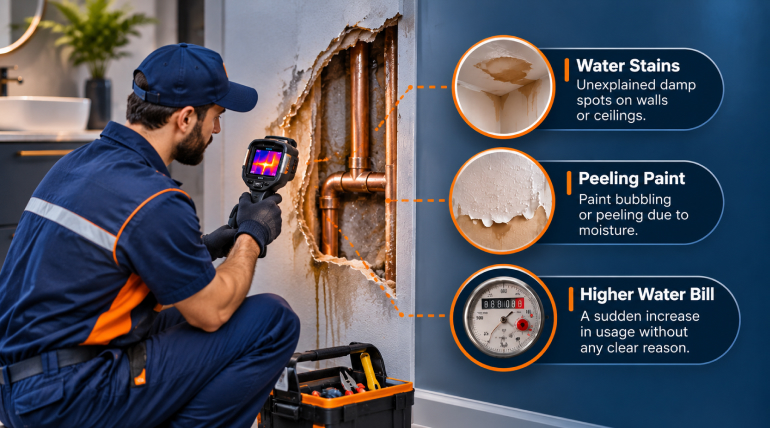
- Peeling paint and damaged wall finishes.
- Water stains on ceilings.
- Damage to furniture and flooring.
- Persistent dampness around the indoor unit.
- Unwanted moisture and potential mould growth.
- Damage to nearby electrical equipment.
The extent of the damage depends on the amount of water, the affected materials and how quickly the problem is addressed.
Early diagnosis can help prevent unnecessary property repairs and reduce the risk of recurring air conditioning problems.
If the leakage is associated with a larger property maintenance issue, our [emergency home repair services] guide can also help you understand the importance of addressing household maintenance problems promptly.
Need Professional AC Water Leakage Repair in Abu Dhabi?
An indoor AC water leak should not be ignored, especially when it continues despite basic maintenance.
Whether the problem involves a blocked condensate drain, frozen evaporator coil, damaged drain pan or incorrect installation, identifying the underlying cause is essential for an effective repair.
Celvion Technical Services provides air conditioning maintenance and repair services in Abu Dhabi. Contact the technical team to discuss your AC problem and arrange an appropriate inspection.
For dependable cooling performance, timely diagnosis and regular maintenance can make a significant difference.
Frequently Asked Questions (FAQs)
Why is my AC leaking water inside the house?
Indoor AC leakage can occur due to several issues, including restricted condensate drainage, excessive dirt on air filters, ice formation on the evaporator coil, damaged collection trays or improper unit installation. Identifying the underlying fault is essential to prevent further leakage and recurring problems.
Is it normal for an air conditioner to produce water?
Yes. Air conditioners naturally produce condensation when warm indoor air passes over cold evaporator coils. This moisture should normally flow through the condensate drainage system. Water dripping inside the room indicates that the collection or drainage arrangement may require attention.
Can a blocked AC drain pipe cause indoor water leakage?
Yes. A blocked condensate drain pipe prevents collected moisture from flowing towards the designated outlet. As water accumulates in the drain pan, it may overflow and leak from the indoor unit.
Why does my split AC leak water when switched off?
Water may continue dripping after the AC is switched off because accumulated ice on the evaporator coil begins to melt. A blocked drain line or damaged drain pan may also allow previously collected water to escape. If water continues to accumulate around the indoor unit despite basic checks, contact an experienced AC technician to examine the drainage system and identify any underlying mechanical or installation issues.
Can dirty AC filters cause water leakage?
Yes. Dirty air filters can restrict airflow across the evaporator coil. Reduced airflow may cause the coil to become excessively cold and freeze. When the accumulated ice melts, water may overflow or escape from the intended drainage pathway.
Can an indoor AC water leak cause damage to your property?
Yes. Uncontrolled condensation or drainage overflow can gradually affect nearby surfaces, leading to damp patches, peeling paint, damaged furnishings and potential mould growth. If moisture reaches electrical connections or nearby appliances, it may also pose a safety risk. Keep the affected area clear and arrange a qualified technician to investigate the source of the leakage.
How can I prevent AC water leakage in Abu Dhabi?
Regular filter cleaning, condensate drain inspections, evaporator coil maintenance and checking pipe insulation can help reduce the risk of indoor water leakage. Periodic professional AC servicing is also recommended, particularly for systems operating for extended periods.
When should I call an AC repair technician for water leakage?
Contact a qualified technician if water leakage persists, returns after basic filter cleaning, is accompanied by ice formation or affects nearby walls and electrical equipment. Professional diagnosis is necessary to identify whether the problem involves drainage, installation or refrigeration components.