

- by saeed
Why Is Your Washing Machine Leaking Water? Common Causes Explained
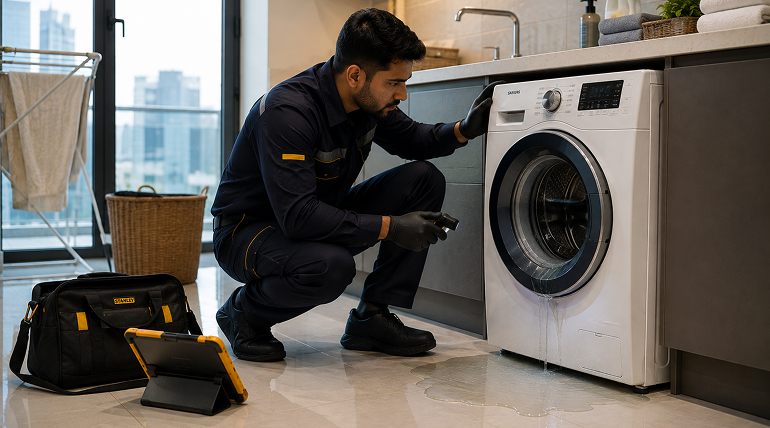
A washing machine that suddenly starts leaking can be more than a minor household inconvenience. Water escaping from the appliance may damage flooring, cabinetry and electrical components, while persistent leakage can indicate a deteriorating hose, seal, pump or internal connection.
If you are wondering, Why is my washing machine leaking water?, the cause is often identifiable from where and when the water appears. Understanding these warning signs can help you take appropriate action before a relatively simple fault develops into a more expensive repair.
Why Is My Washing Machine Leaking Water?
A washing machine leaking water can result from several causes, including a damaged hose, deteriorated door seal, blocked drain system, excessive detergent, an overloaded drum or a defective drain pump.
The location of the leak provides an important diagnostic clue:
- Water at the front: door seal, detergent drawer or door-related issue
- Water underneath: drain pump, internal hose or tub-related fault
- Water at the rear: inlet or drain hose connection
- Water during filling: inlet hose, valve or detergent drawer
- Water during draining: drain hose, filter or drain pump
The timing and location of the leakage can therefore help narrow down the likely cause.
Common Causes of Washing Machine Water Leakage
- Damaged or Loose Water Hoses
The water inlet and drain hoses are among the first components to inspect. Repeated movement, pressure and ageing can cause hoses to crack, loosen or deteriorate at their connections.
A small split may initially produce only occasional dripping but can develop into substantial leakage during a wash cycle.
Check the hose connections for visible damage, moisture or loose fittings. If a hose is cracked or significantly worn, replacement is generally preferable to attempting a temporary repair.
- Worn Door Seal
Front-loading washing machines use a rubber door gasket to prevent water from escaping around the door.
Over time, the seal may become cracked, deformed or contaminated with detergent residue and foreign objects. A damaged gasket can cause water to escape from the front of the appliance, particularly during high-speed washing or spinning.
Inspect the seal carefully for:
- Cracks or tears
- Foreign objects
- Mould or residue
- Deformation
- Gaps between the gasket and door
Keeping the gasket clean and avoiding sharp objects in clothing pockets can help preserve its condition.
- Blocked Drain Filter or Drain System
A blocked drain filter can restrict water flow and place additional pressure on the drainage system. Coins, lint, hair, fabric fibres and other small objects can accumulate inside the filter or pump area.
If water remains inside the drum or appears around the base of the machine after draining, the filter and drainage system should be inspected.
Before opening a drain filter, switch off the appliance and follow the manufacturer’s safety instructions, as residual water may escape.
- Excessive Detergent
Using too much detergent can produce excessive foam. In some circumstances, this can cause water or suds to escape through areas that would normally remain sealed.
Always use the detergent quantity recommended for the appliance, water conditions and selected programme. High-efficiency machines often require considerably less detergent than older models.
Excess detergent can also contribute to residue accumulation, unpleasant odours and reduced washing performance.
- Overloading the Washing Machine
An overloaded drum can interfere with normal water distribution and place additional mechanical stress on the appliance.
Excessive loads may also cause unbalanced spinning, severe vibration and movement of the machine. Over time, this can contribute to wear in hoses, seals and other components.
Follow the manufacturer’s specified load capacity and distribute garments evenly within the drum.
- Faulty Drain Pump
The drain pump is responsible for removing wastewater from the washing machine. A damaged or obstructed pump may prevent water from being discharged correctly.
Typical symptoms include:
- Water remaining in the drum
- Slow drainage
- Unusual humming or grinding sounds
- Leakage from underneath the appliance
- Repeated drainage errors
Because the pump is an internal electrical and mechanical component, professional diagnosis is advisable when cleaning the filter does not resolve the problem.
What Causes a Washing Machine to Leak from the Bottom?
A leak underneath the appliance may indicate a damaged internal hose, drain pump problem, tub seal deterioration or another internal fault.
Start by checking the easily accessible hoses and ensuring the appliance is positioned correctly. If the source cannot be identified without dismantling the machine, avoid removing internal components unnecessarily.
The presence of moisture near electrical connections presents a potential electrical safety risk and warrants immediate attention. Disconnect the appliance from the electrical supply and arrange professional Washing Machine Repair if the leak is substantial or originates from an internal component.
Why Is My Washing Machine Leaking From the Door?
If water is escaping from the front door, inspect the rubber gasket for tears, deformation or trapped objects. An incorrectly positioned garment can also prevent the door from sealing properly.
A deteriorated door gasket generally needs to be replaced rather than repaired. Continuing to operate the appliance with a damaged seal may allow water to reach electrical or structural components.
Why Is My Washing Machine Leaking During the Wash Cycle?
The timing of the leak can help identify the underlying problem.
If leakage occurs while the machine is filling, inspect the inlet hose, water inlet valve and detergent drawer.
If it occurs during washing, examine the door gasket, detergent system and internal hoses.
If leakage appears during draining, the drain hose, filter and drain pump become more likely sources.
If the appliance leaks primarily during spinning, excessive loading, an unbalanced drum, damaged seals or structural movement may require investigation.
Can a Leaking Washing Machine Be Safely Repaired at Home?
Some basic maintenance tasks are suitable for homeowners. These include cleaning the drain filter, removing visible debris from the door gasket, checking accessible hose connections and ensuring that the appliance is level.
However, internal electrical, mechanical or water-system repairs should generally be performed by a qualified technician. Attempting to repair a pump, motor, control board or internal seal without the appropriate expertise may cause further damage or create an electrical or water-safety risk.
When Should You Seek Professional Washing Machine Repair?
Professional assistance is advisable when:
- Water is leaking from inside the appliance
- The drain pump appears defective
- The door gasket is severely damaged
- The machine repeatedly displays error codes
- The appliance trips the electrical circuit
- Leakage continues after basic checks
- Water is reaching electrical components
For residents seeking Washing Machine Repair Abu Dhabi, selecting a qualified local technician can provide faster diagnosis and appropriate replacement of faulty components.
How Can You Prevent Washing Machine Water Leakage?
Preventive care can significantly reduce the likelihood of recurring leaks.
A practical maintenance routine includes:
- Inspecting inlet and drain hoses periodically
- Cleaning the drain filter according to manufacturer instructions
- Keeping the door gasket clean and dry
- Using the recommended quantity of detergent
- Avoiding excessive loads
- Keeping the appliance level
- Removing foreign objects from clothing pockets
- Addressing unusual noises or drainage problems promptly
These measures support reliable operation and may extend the appliance’s service life.
Final Takeaway
A washing machine leaking water should not be ignored, even when the leak appears minor. Damaged hoses, worn door gaskets, blocked drainage systems, excessive detergent, overloading and faulty pumps are among the most common causes.
The location and timing of the leakage provide useful clues, but persistent or internal leaks require professional assessment. Early intervention can prevent water damage, reduce the likelihood of secondary component failure and avoid unnecessarily expensive repairs.
If basic checks do not resolve the problem, professional Washing Machine Repair is the safest and most reliable approach. For households requiring local assistance, an experienced Washing Machine Repair Abu Dhabi technician can diagnose the fault, identify the failed component and recommend whether repair or replacement is the more appropriate long-term solution.
Frequently Asked Questions (FAQs)
What are the most common causes of a washing machine leaking water?
The most common causes include damaged or loose water hoses, worn door gaskets, blocked drain filters, faulty drain pumps, excessive detergent, and overloading. The location and timing of the leak can provide useful diagnostic clues. For example, leakage from the rear may indicate a hose problem, whereas water beneath the appliance may suggest an internal hose, pump, or seal fault.
Why is my washing machine leaking from the bottom?
Water leaking from the bottom of a washing machine may result from a damaged drain pump, deteriorated internal hose, tub seal failure, or a blocked drainage system. If accessible hoses and the drain filter appear to be in good condition but the leakage persists, professional inspection is advisable because internal components may need to be examined or replaced.
Why is my washing machine leaking from the door?
A front-loading washing machine may leak from the door when its rubber gasket has become cracked, deformed, contaminated with residue, or obstructed by a foreign object. Inspect the gasket for visible damage and ensure that clothing is not trapped between the seal and door. A significantly deteriorated gasket should generally be replaced rather than repaired.
Is it safe to use a washing machine that is leaking water?
It is generally advisable to stop using a washing machine when significant or unexplained leakage occurs, particularly if water is approaching electrical connections. Moisture near electrical components can create a potential safety hazard. Disconnect the appliance from the electrical supply where it is safe to do so, shut off the water supply if necessary, and arrange a professional inspection if the source of the leak cannot be identified.
When should I call a professional washing machine repair service?
Professional Washing Machine Repair is recommended when leakage continues after basic checks, originates from an internal component, or is accompanied by unusual noises, drainage problems, error codes, electrical faults, or failure to complete the wash cycle. For homeowners requiring Washing Machine Repair Abu Dhabi, a qualified technician can identify the underlying fault, assess the condition of the appliance, and determine whether repair or replacement is the more appropriate solution.