

- by saeed
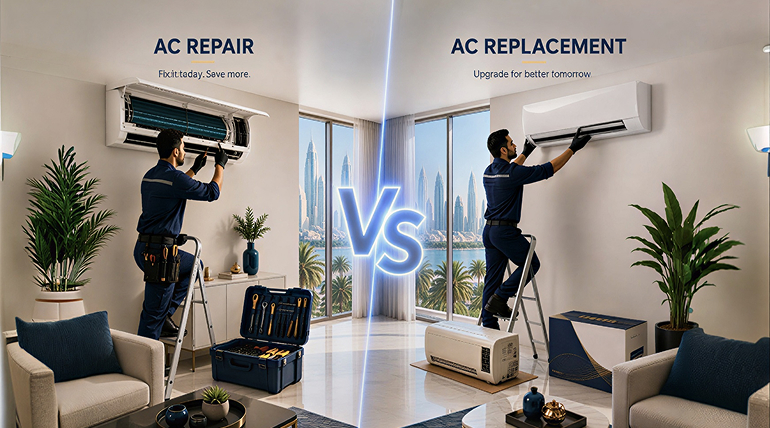
AC Repair vs AC Replacement: Which Option Saves More Money?
When an air conditioner begins to lose cooling performance, many homeowners and business owners face an important question: Should you invest in AC Repair or replace the entire system? The answer depends on several factors, including the age of the equipment, repair costs, energy efficiency, and long-term operating expenses. Making an informed decision can reduce unnecessary expenditure while ensuring reliable indoor comfort.
This guide explains when AC Repair is the most economical option, when AC Replacement becomes a better investment, and how to evaluate the true cost of ownership over the life of an air conditioning system.
Why the Decision Matters
An air conditioner represents a significant investment. Replacing a system prematurely may result in unnecessary expenditure, while delaying replacement for an ageing unit can lead to escalating repair costs, higher electricity consumption, and reduced cooling performance.
Rather than focusing solely on the immediate repair bill, property owners should evaluate the system’s overall efficiency, reliability, and remaining service life.
Circumstances Under Which Air Conditioning Repair Represents the Most Economically Advantageous Option
In many situations, repairing an existing air conditioner is the most cost-effective solution.
Professional Air Conditioner Repair is generally recommended when:
- The unit is less than 8–10 years old.
- The repair involves minor electrical or mechanical components.
- Cooling performance remains satisfactory after servicing.
- The compressor and evaporator coils are in good condition.
- The repair cost represents only a small proportion of the replacement cost.
- Routine maintenance has been performed consistently.
Typical repair issues include:
- Refrigerant leakage
- Faulty thermostat
- Dirty condenser coils
- Clogged air filters
- Capacitor failure
- Fan motor replacement
- Electrical connection faults
Addressing these problems promptly often restores optimal performance while extending the operational lifespan of the equipment.
When AC Replacement Becomes the Smarter Investment
Although repairs may restore functionality temporarily, replacement is often more economical when the system has reached the end of its expected service life.
AC Replacement should be considered when:
- The air conditioning system has exceeded an operational lifespan of approximately 12 to 15 years.
- Critical components, most notably the compressor, have experienced significant mechanical failure or have reached the end of their functional service life.
- Repairs are required repeatedly.
- Electricity bills continue to increase.
- Cooling performance has declined significantly.
- Spare parts are becoming difficult to obtain.
- The equipment uses obsolete refrigerants.
Modern air conditioning systems offer substantial improvements in energy efficiency, quieter operation, environmental performance, and smart temperature control.
Comparing Long-Term Costs
The true cost of an air conditioning system extends beyond the initial repair invoice.
Several financial considerations influence the decision:
Repair Costs
Repairs usually involve:
- Replacement parts
- Labour charges
- Refrigerant refilling
- Diagnostic inspections
Minor repairs remain economical when the overall condition of the system is good.
Replacement Costs
Although installing a new system requires greater initial investment, long-term savings may include:
- Lower electricity consumption
- Reduced maintenance expenses
- Improved cooling efficiency
- Manufacturer warranties
- Greater reliability
- Extended equipment lifespan
Over several years, these savings may offset the higher installation cost.
The Importance of Energy Efficiency
One of the most significant advantages of replacing an ageing air conditioner is improved energy efficiency.
Older systems often consume considerably more electricity because of:
- Worn compressors
- Dirty coils
- Reduced refrigerant performance
- Declining mechanical efficiency
- Continuous operating cycles
Modern systems are engineered to deliver superior cooling while consuming substantially less energy.
If your monthly electricity bills continue to increase despite regular servicing, replacement may represent the more economical long-term solution.
Consider the Age of the System
Industry professionals generally regard the age of the equipment as an important decision-making factor.
Repair Is Usually Appropriate
- Less than 8 years old
- Well maintained
- No history of major repairs
Evaluate Carefully
- Between 8 and 12 years old
- Increasing repair frequency
- Moderate decline in efficiency
Replacement Is Often Recommended
- More than 12–15 years old
- Frequent breakdowns
- Major component failure
- High operating costs
Age alone should not determine the decision, but it provides valuable guidance when considered alongside repair history and overall performance.
Warning Signs That Replacement May Be Necessary
Several indicators suggest that continued repairs may no longer be financially justified.
These include:
- Uneven cooling throughout the property
- Frequent refrigerant leaks
- Persistent compressor problems
- Loud operating noises
- Poor indoor air quality
- Excessive humidity
- Rising electricity bills
- Repeated emergency repairs
When multiple symptoms occur simultaneously, replacement often provides greater long-term value.
The Value of Professional Inspection
Many property owners are inclined to assume that replacement is the only appropriate course of action upon observing a decline in cooling performance.
A qualified technician can perform a comprehensive inspection that includes:
- Refrigerant pressure testing
- Compressor performance evaluation
- Thermostat calibration
- Electrical safety inspection
- Airflow assessment
- Condenser and evaporator coil examination
- Overall cooling efficiency analysis
An objective assessment allows homeowners to compare repair costs with the expected remaining service life of the equipment.
How Preventive Maintenance Influences the Decision
Consistent preventive maintenance can substantially prolong the operational lifespan of an air conditioning system, thereby delaying the necessity for replacement.
Preventive servicing includes:
- Air filter cleaning
- Coil cleaning
- Refrigerant inspection
- Drain line cleaning
- Electrical testing
- Thermostat calibration
- Airflow optimisation
Well-maintained systems generally operate more efficiently, experience fewer breakdowns, and remain reliable for many additional years.
Should You Repair or Replace?
The decision should be based on technical evaluation rather than convenience alone.
Choose AC Repair when:
- The fault is relatively minor.
- The unit remains energy efficient.
- Repairs are infrequent.
- Major components remain in good condition.
Choose AC Replacement when:
- Repairs have become increasingly frequent.
- Energy consumption continues to rise.
- Cooling performance cannot be restored economically.
Conclusion
The choice between AC Repair vs AC Replacement depends on a careful assessment of equipment age, repair frequency, energy efficiency, operating costs, and overall system condition. Minor faults affecting relatively modern systems can often be resolved through professional repairs, making repair the more economical option. Conversely, ageing systems that require repeated repairs, consume excessive electricity, or suffer from major component failures frequently justify replacement as a more sustainable long-term investment.
Before reaching a final decision, it is advisable to undertake a comprehensive professional inspection to assess the overall condition, operational efficiency, and remaining service life of the air conditioning system. An evidence-based assessment will help determine whether AC Repair can restore reliable performance or whether AC Replacement will provide greater financial value through improved efficiency, reduced operating costs, and enhanced long-term reliability.
Frequently Asked Questions (FAQs)
How do I decide whether my air conditioner should be repaired or replaced?
The decision depends on several factors, including the age of the system, the frequency of repairs, energy efficiency, and the condition of major components such as the compressor. Air conditioners that are relatively new and require only minor repairs can often be restored cost-effectively. However, systems that experience recurring breakdowns, consume excessive electricity, or have exceeded their expected service life may provide greater long-term value through replacement.
When is AC repair more cost-effective than AC replacement?
Professional AC Repair is generally the more economical option when the air conditioner is less than 10 years old, the repair involves minor components such as thermostats, capacitors, or fan motors, and the overall system continues to operate efficiently. Timely repairs combined with regular preventive maintenance can significantly extend the operational lifespan of the equipment while avoiding the expense of premature replacement.
What are the warning signs that indicate an air conditioner should be replaced rather than repaired?
Replacement should be considered when the air conditioner requires frequent repairs, exhibits declining cooling performance, produces unusually high electricity bills, experiences compressor failure, uses obsolete refrigerants, or has exceeded approximately 12 to 15 years of service. A comprehensive professional inspection can determine whether continued repairs remain economically viable or whether installing a new system represents the more sustainable investment.
Can regular AC maintenance delay the need for replacement?
Yes. Routine preventive maintenance plays a crucial role in preserving cooling efficiency, improving energy performance, and reducing mechanical wear. Services such as air filter cleaning, condenser and evaporator coil maintenance, refrigerant level inspection, thermostat calibration, and electrical safety checks enable potential faults to be identified at an early stage, thereby extending equipment lifespan and reducing the likelihood of major system failures.
Why is a professional AC inspection important before deciding between repair and replacement?
A professional inspection provides an objective assessment of the air conditioning system by evaluating compressor performance, refrigerant pressure, electrical components, airflow, cooling efficiency, and the overall mechanical condition of the equipment. This evidence-based evaluation enables property owners to compare repair costs with the expected remaining service life of the system, ensuring that the final decision is both technically sound and financially prudent.